Shed approval in Ipswich
Ipswich now runs a new planning scheme, so older advice on sheds may be out of date. A shed or garage may be exempt building work only while it stays within the state's small size and height limits, and beyond that it needs building approval from a certifier or the council.
A shed, garage or carport may be built to the side or rear boundary in Ipswich while it stays within a maximum and a mean height, everything in that setback runs to a capped combined length, and it keeps clear of a habitable room window on the next lot. A wall built to the boundary also keeps clear of any existing window or wall next door.
Site cover counts every building and structure roofed in impervious material, sheds included, against the council's limit. A shipping container is treated as a transportable building here, so the council gives a referral response before the building permit issues. Front setbacks come from the scheme, with a garage door set further back than the house.
For hazards in Ipswich the state's mapping is the guide, covering bushfire, flood, heritage, landslide and vegetation. Flood mapping can condition floor level and siting, and landslide usually means a soil test and engineer designed footings. A siting variation goes to the council, and building approval sits with a private certifier or the council. Urban Utilities decides build-over and never allows building over a maintenance hole or a pressure water main.
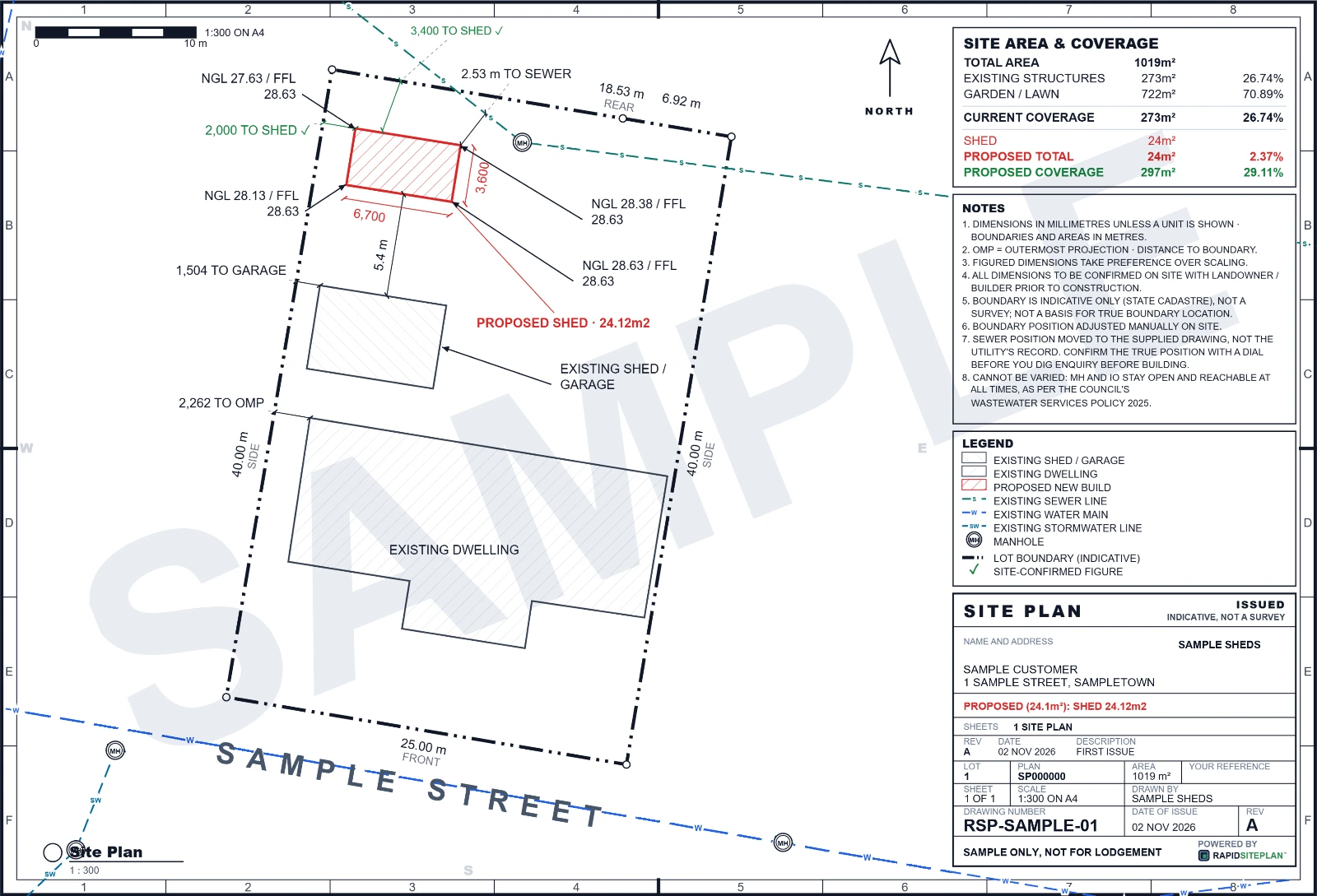
The site plan shows the shed's height, its boundary distances, everything else in the boundary setback, the neighbour's windows, the site cover, and the sewer.
What catches people out in Ipswich
- Advice written before the new planning scheme may be stale.
- Everything built in the boundary setback counts toward one combined length.
- A shipping container needs the council's referral response first.
- A habitable room window next door sets how close a boundary wall can go.
What a site plan for a shed looks like
RapidSiteplan is design software: you confirm details, measure on site and your certifier or council makes the approval decision. This page is general information, not building or legal advice.